
Office Glass Walls in Toronto: Types, Benefits, and What to Choose
Modern offices are moving toward open, bright layouts—without sacrificing professionalism. Office glass walls are one of the most popular ways to create clean separation between spaces while keeping the workplace feeling connected and spacious.
In this guide, we’ll break down the most common types of office glass walls, where they work best, and what to consider before installing them.

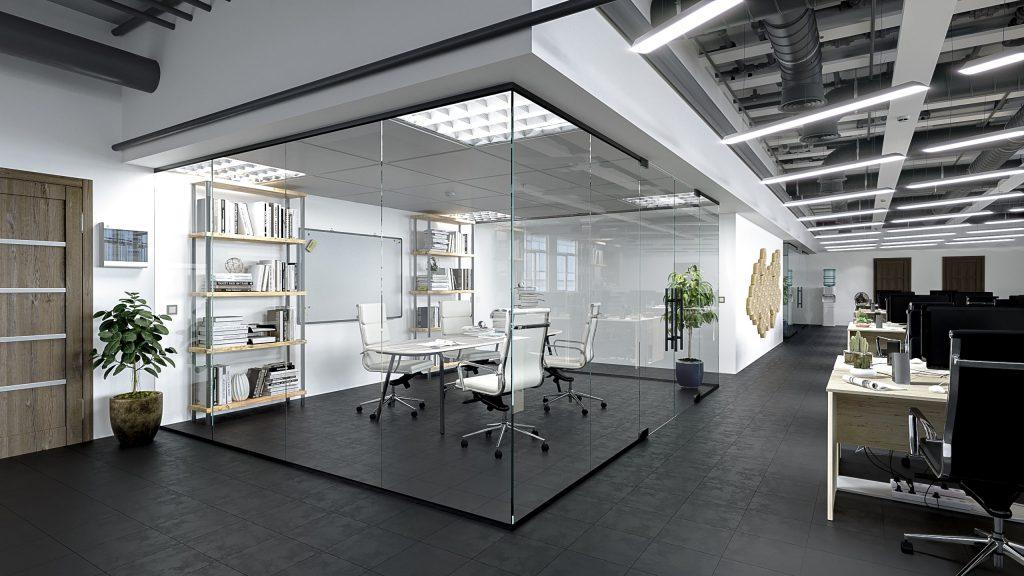
What Are Office Glass Walls?
Office glass walls are interior glass systems used to divide rooms, create meeting spaces, or form private offices—while maintaining natural light and a modern look. They can be framed or frameless and can include doors, sliding systems, or privacy treatments.
Why Toronto Offices Choose Glass Walls
Glass walls are popular in Toronto because they match modern commercial design while supporting practical space planning.
More natural light: Bright spaces feel bigger and more welcoming.
Modern professional look: Clean lines and premium design.
Better space planning: Define offices and meeting rooms without heavy construction.
Improved team visibility: Keeps a connected feel while still separating zones.
Custom options: Choose clear glass, frosted, tinted, or branded film.
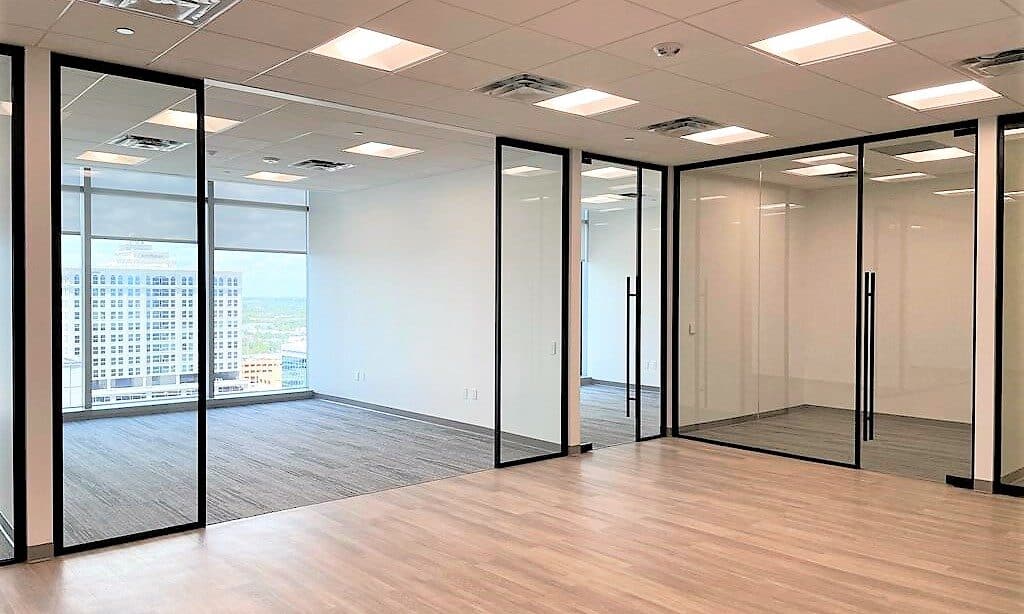
Common Types of Office Glass Walls
1. Frameless Glass Walls
Minimal hardware and a sleek look—great for high-end offices and modern interiors.
3. Glass Walls with Doors
Swing or sliding doors can be added to create conference rooms, offices, or boardrooms.
2. Framed Glass Wall Systems
More structure and flexibility, often better for stronger acoustic performance and larger layouts.
4. Partial Glass Walls
Ideal when you want separation without fully closing off the space.
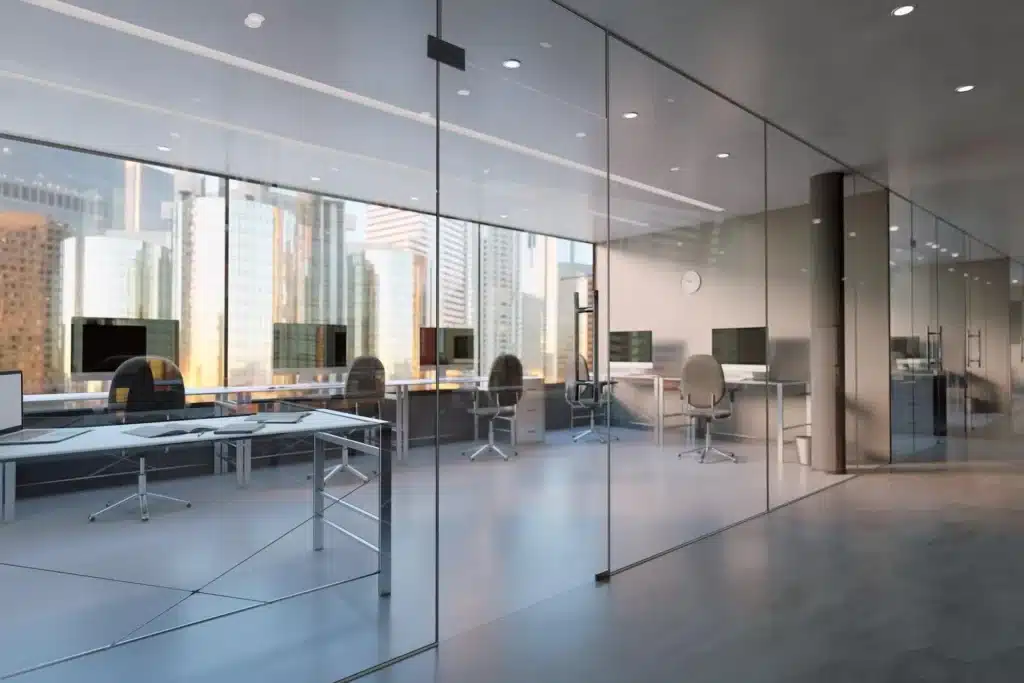
Privacy Options for Office Glass Walls
Privacy is one of the biggest concerns with glass—and it’s easy to solve:
Frosted glass (full or partial)
Decorative privacy film (lines, gradients, patterns)
Custom branding film (logo and design elements)
Tinted glass options (where suitable)
Where Office Glass Walls Work Best
Private offices and executive areas
Meeting rooms and boardrooms
Reception and entry areas
Collaborative zones and breakout spaces
Hallways and interior partitions

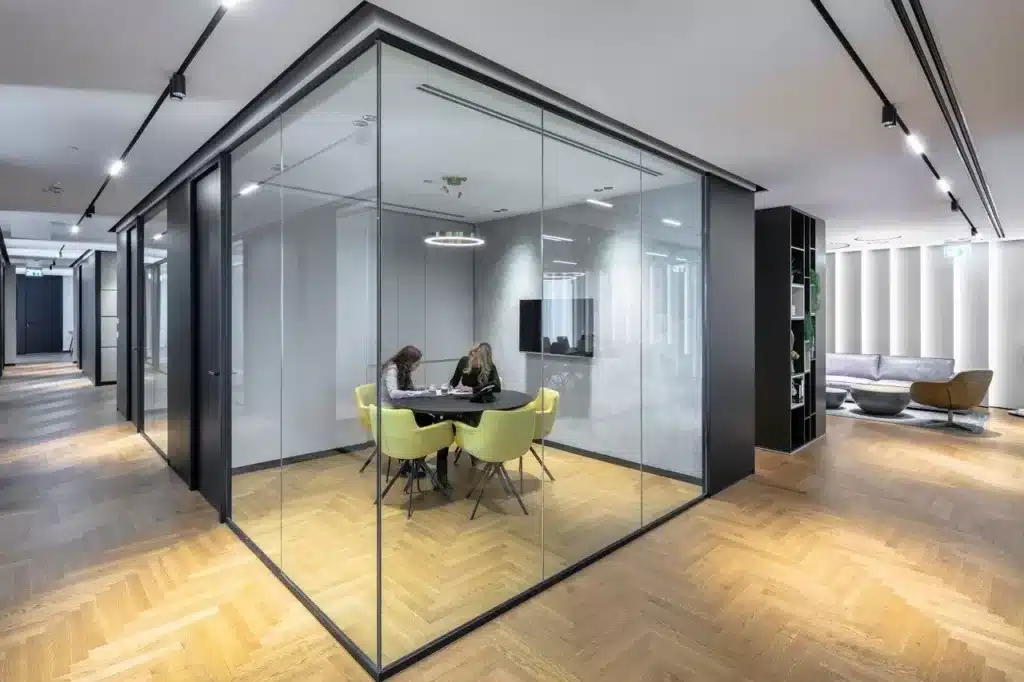
What to Consider Before Installing Office Glass Walls in Toronto
Layout + measurements: Plan door swing, circulation, and sightlines.
Sound expectations: Glass helps visually, but acoustic solutions may be needed for privacy.
Hardware and finishing: Handles, channels, and edges impact the final look.
Building requirements: Commercial spaces may require specific glass specs.
Office Glass Wall Installation in Toronto
A glass wall system only looks “high-end” if it’s installed precisely. Clean lines, strong mounting, proper sealing, and accurate measurements make the difference between a basic install and a professional finish.
Frequently Asked Questions
You have questions – we have answers.
Costs depend on the layout size, glass type, framed vs frameless system, door choice, and privacy film. The best way to price it accurately is a quick site review and measurements.
Yes. You can add privacy with frosted glass, patterned film, or partial frosting (common for meeting rooms). This keeps the office bright while improving comfort.
They can help create separation, but sound control depends on the system (framed vs frameless), seals, door type, and how the wall connects to the ceiling. If sound privacy is a priority, plan for acoustic-friendly options.
Frameless looks more minimal and modern. Framed systems offer more structure and can be better for larger layouts or higher-traffic areas. The right choice depends on your office design and usage.
Yes—glass walls are often installed during renovations or office reconfigurations. As long as the layout and mounting surfaces are suitable, retrofits are very common.
Timing depends on project size and complexity (number of rooms, doors, and privacy features). Smaller office builds can be quicker, while larger layouts take longer due to fabrication and scheduling.